Municipal police
Manage conflict, protect, and intervene with humanity
Someone refuses to cooperate. Your partner is two metres away. Bystanders stop to watch. Between talking and using force lies an entire space of skills — that's the space the ResponsAbility method trains.
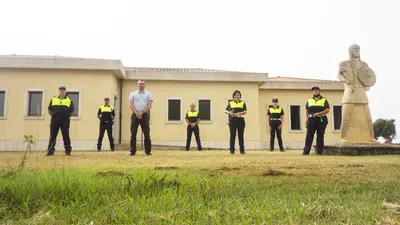
The situations municipal police must be ready for
In a single shift, a patrol may encounter a verbally aggressive person, someone who refuses to cooperate, someone intoxicated or under the influence, a teenager whose tension is rising, a disoriented elderly person, a behavioural disorder, or a physical assault.
These situations share one thing in common: they almost never unfold as expected.
A person refuses to step back. Your partner is two metres away. The street is narrow. Bystanders stop to watch. You have to keep communicating while watching your surroundings and your partner.
At that moment, knowing a technique isn’t enough. You need to be able to read the situation, position yourself correctly, communicate with your partner, and choose an appropriate response without letting the conflict dictate the pace.
It’s precisely this ability to stay operational when a situation becomes confusing and stressful that we work on with teams.
1. When physical force isn’t enough
The problem isn’t a matter of courage
An officer can be fully committed to an intervention and still end up struggling against someone who refuses any cooperation, resists, or simply exploits poor positioning.
In the field, the difference often comes down to very concrete things: distance, positioning, the ability to see what your partner is doing, how you make contact, mutual protection, or the ability to regain distance when a situation deteriorates.
This becomes especially important when officers don’t share the same build or experience.
A response based solely on physical force quickly hits its limits. Technique should reduce, as much as possible, the impact of differences in build, strength, or physical configuration between the officer and the person in front of them.
That’s why we start by working on automatic reflexes: positioning, distance, coordination, protection, and contact management. The goal isn’t to turn every officer into a combat specialist, but to give them more options when the intervention doesn’t go as planned.
2. Building rapport before the conflict escalates
An intervention often begins before physical contact
Tone of voice, listening, distance, body position, the first instruction, or how you respond to a provocation can all change the course of an intervention.
A poorly handled interaction can raise tension: the person feels provoked, the officer becomes defensive, both sides harden their position, and the dialogue quickly turns into a power struggle.
De-escalation means working precisely on this phase
This includes knowing how to set a clear frame, give an understandable instruction, create or maintain a useful distance, avoid verbal one-upmanship, and acknowledge what’s happening without losing control of the intervention.
These are trainable skills
Calmly repeating an instruction while the other person raises their voice is a skill. Keeping an appropriate distance while the person advances is another. Knowing the exact moment when dialogue stops working is yet another.
De-escalation is therefore not a general posture of “kindness.” It is an operational skill that must be available under pressure.
3. Finding an intermediate force between dialogue and restraint
Between conversation and a rough physical intervention lies a whole set of intermediate responses.
Positioning, distance control, partner protection, escorting, disengaging, proportionate physical control, separating, or exiting contact are all part of this space.
In the ResponsAbility method, we work in particular around simple principles to remember under stress: contain, separate, disengage, break free from a grab.
The goal isn’t to teach a recipe that applies regardless of context. The same action can be appropriate in one situation and unsuitable in another.
The officer must therefore be able to assess the situation, the environment, the other person’s behaviour, the presence of a partner or bystanders, and the resources actually available.
This approach matters especially in municipal policing. Officers work in direct contact with the public, in widely varying urban environments, with equipment and organisations that differ from one department to another.
Mandatory equipment and procedures obviously keep their place. Our training doesn’t replace them.
It works on what happens around and during an intervention: communication, positioning, protection, coordination, and control, when the officer must run two mutually exclusive processes at once: negotiation (structured reasoning) and action (instinctive shortcuts).
4. Intervening with vulnerable people
Situations involving vulnerable people call for particular attention.
This can involve a disoriented elderly person, a teenager, someone with a behavioural disorder, or someone under the influence of substances.
In these situations, the observed behaviour alone cannot determine how dangerous the person is.
We don’t make medical diagnoses. What we can do is train officers to observe more, adapt their communication, maintain a safe distance, and avoid too quickly turning a relational difficulty into a physical confrontation.
A person who is difficult to manage isn’t necessarily a person who needs to be restrained.
This doesn’t mean giving up on the frame. On the contrary: the more uncertain a situation is, the more officers need simple reference points for what to do, what to say, where to position themselves, and how to protect their partner.
The goal is to stay calm and professional without losing the ability to intervene when the situation requires it.
Force is not the first response
An intervention can be viewed as a sequence of decisions:
observe → assess → communicate → set the frame → create distance → protect → coordinate → intervene if necessary → control the situation → return to calm.
This sequence isn’t a mandatory legal procedure. It’s a teaching framework used to work through the different options before, during, and after an intervention.
Above all, it’s a reminder: physical contact is only one moment within the intervention.
What happens before and after also matters to the safety of the officer, their partner, and the person involved.
A method built on three dimensions
The ResponsAbility method rests on several skills that must work together.
Protect. Know how to protect yourself, protect your partner, and maintain a position that still allows you to act.
Defuse. Know how to communicate with a hostile person without unnecessarily fuelling the confrontation.
Intervene. Have appropriate physical responses ready for when communication is no longer enough.
Control. Keep control of the situation without confusing control with brutality.
Return to calm. An intervention doesn’t necessarily end when physical contact stops. You also need to know how to bring tension down and return to normal operating conditions.
These dimensions are trained together in the ResponsAbility method: words — communication, verbal posture, frame and limits —, the body — distance, space, protection and control —, and the mind — stress management, emotional control, and clarity under pressure.
The TOP© tools complement this work on the ability to stay operational as stress levels rise.
Why municipal police officers come to us
The requests we receive most often concern aggressive behaviour, protection during intervention, differences in build, working as a pair, communication under pressure, and interventions involving vulnerable people.
Another request comes up regularly: how do you turn familiar instructions into reflexes that are actually available when a situation accelerates?
This is an important distinction.
Reading a procedure in a training room and having to act while someone is shouting, moving toward you, and your partner must simultaneously watch the surroundings, don’t draw on the same abilities.
Initial training and mandatory certifications each have their own role. They can’t reproduce every situation a municipal team faces day to day.
Our work starts from these concrete situations to train the skills that will actually be called upon in the field.
Training built from real field situations
We don’t try to teach officers a list of techniques disconnected from one another.
The training relies on scenario-based practice, with repetition, observation, and debriefing. Scenarios can be built from situations encountered by the department and adapted to its environment, staffing, and equipment.
Debriefing is an essential part of the work
After a scenario, we can revisit positioning, communication, coordination between partners, what triggered or reduced tension, and the moments when officers lost or regained control of the situation.
The skill we’re after isn’t simply “knowing a technique.”
It’s being able to mobilise an appropriate response while the situation is fast, confusing, and stressful.
See the Conflict Management training for the full programme, format, and pricing, or the measured results from sessions already delivered.
This training is led by Jérôme Bouteiller, who has also adapted it for hospital teams facing de-escalation, protection, and tense-situation management challenges.
Frequently asked questions
Why train municipal police officers in conflict management?
Because initial training and mandatory certifications can’t cover the full diversity of situations encountered in the field.
Conflict management adds complementary work on communication, positioning, protection, coordination, and the ability to choose a proportionate response as a situation evolves quickly.
Does conflict management training replace mandatory certification training?
No.
Mandatory equipment, procedures, and certifications keep their place. This training comes in addition, notably on communication, positioning, protection, and control in conflict situations.
What training helps manage an aggressive person in municipal policing?
Useful training has to work several dimensions at once: communicating with the person, maintaining an appropriate distance, protecting your partner, managing your own stress level, and having proportionate physical responses ready for when dialogue is no longer enough.
That’s the approach developed in the ResponsAbility method.
What is de-escalation in an intervention?
De-escalation covers the means used to reduce tension before it turns into a physical confrontation: clear communication, framing, distance, posture, and control over verbal one-upmanship.
It doesn’t mean letting things slide. It means exercising authority without adding unnecessary tension to the situation.
How do you manage an aggressive person without worsening the conflict?
By avoiding verbal one-upmanship in particular, giving simple and repeatable instructions, and maintaining a professional posture.
These behaviours can be trained through scenario practice. The goal is for the officer to keep them even as their own stress level rises.
What intervention techniques apply to municipal police?
The training works on positioning, distance control, partner protection, and proportionate physical responses such as containing, separating, disengaging, or breaking free from a grab.
These skills are always placed back in the context of the intervention, the applicable legal framework, and the equipment actually available.
How do you handle an intervention involving a vulnerable person?
By first distinguishing the observed behaviour from the person’s actual dangerousness.
Without making a diagnosis, the officer can adapt their communication, maintain a useful distance, set a clear frame, and keep their capacity to protect and intervene.
How do you intervene with an aggressive elderly person?
With the same approach used for anyone in a tense situation: observe, communicate, set a frame, keep a useful distance — while accounting for possible disorientation, without automatically treating it as a sign of danger.
Age alone doesn’t determine whether someone is dangerous or not.
How do you manage an aggressive teenager?
By avoiding unnecessary verbal escalation as much as possible and maintaining a clear frame.
The goal is to bring tension down whenever possible, while keeping the ability to intervene if the situation turns physical.
How do you manage someone under the influence of substances?
By adapting communication: simple, repeated instructions, minimal simultaneous information, and heightened awareness of hard-to-predict reactions.
The goal isn’t necessarily to convince the person, but to maintain conditions that keep the intervention as safe as possible.
Why is communication so important during an intervention?
Because an intervention begins before physical contact.
Clear communication can prevent unnecessary escalation and also helps coordinate with a partner, set limits, and prepare for what comes next in the intervention.
What are the alternatives to using force?
Communication, distance management, positioning, pair coordination, and various forms of proportionate control can resolve certain situations without immediately resorting to greater force.
The right response obviously depends on the context and the level of danger involved.
How can a municipal police unit improve its safety?
By working on very concrete elements: positioning, distance, communication between partners, mutual protection, and coordination.
The goal is to turn these principles into reflexes solid enough to stay available when a situation becomes stressful.
Why train intervention techniques as a pair?
Because a pair needs to be able to act together without having to define every action at the last moment.
Positioning, roles, communication, and mutual protection can all be trained until they become shared reflexes.
What role does empathy play in a municipal police intervention?
Empathy can help understand what’s happening and reduce tension. It doesn’t excuse setting a frame.
In an intervention, the goal is to stay human in how you communicate while keeping the firmness the mission requires.
How do you train municipal police officers for conflict situations?
Through scenario-based practice and repetition.
Scenarios help train communication, positioning, coordination, and physical response in conditions close to real field constraints. Debriefing then helps identify what worked, what created tension, and what needs more work.
How do you organise training for a municipal police department?
The starting point is usually a discussion with department leadership about context, staffing, equipment, environment, and the situations officers regularly face.
This information is used to build training scenarios that genuinely match the department’s context.
Contact me to discuss it.
Can the training be adapted to the department's equipment?
Yes.
The equipment actually available and each department’s own procedures are taken into account, rather than imposing a generic protocol.
Let's talk about your field situations
Assess your teams’ risk exposure in 3 minutes, or talk to us directly about your department.