
Two kinds of school violence, only one we talk about
When people say “school violence”, everyone first thinks of violence between students: bullying, playground fights, rivalries that get out of hand. That’s real, and it’s serious. But there’s a second kind of school violence, quieter, that we talk about far less: the one teachers experience. Insults, provocations, sometimes physical gestures — a daily reality many teachers absorb in silence, for lack of words, of a framework, or simply because no one ever prepared them for it.
As a parent, trainer and former student, I’ve worked on both fronts. And the same key comes up every time: the ability to name an emotion before it turns into an outburst.
What I’ve seen with students
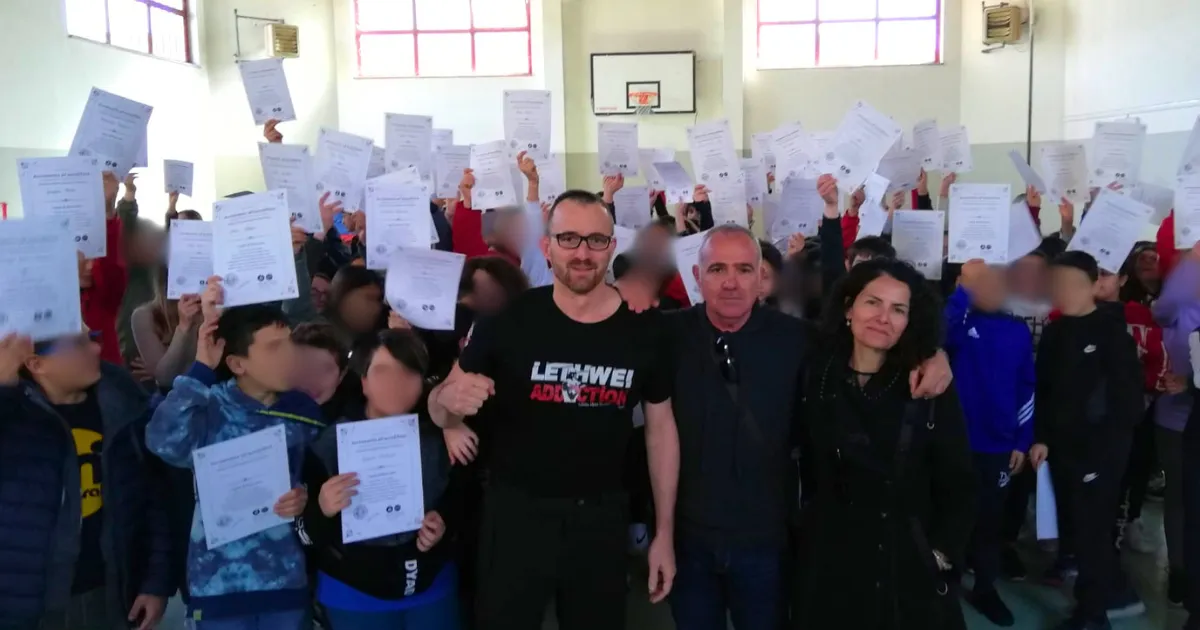
I’ve mostly worked with students, and the results have often surprised me, in a good way. Faced with a simulated violent situation, some spontaneously rise up against the injustice of the scene, even before being asked to react. Others, without discussing it, organise themselves to protect a more vulnerable classmate — a collective reflex no theoretical lesson had prepared, but that the role-play brought out.
That’s not chance. When you give a group of students a framework where emotion can be named and seen before being suppressed, you don’t just avoid a one-off conflict — you reveal a capacity for solidarity that already existed, but had never had the chance to express itself.
Suppressed emotion drives violence
Emotions sit at the heart of our behaviour. Repressed or poorly expressed, they don’t disappear — they accumulate, until they become tension, then sometimes aggression. Letting a student put into words what they feel, understand it and express it clearly isn’t an optional wellbeing exercise: it’s a concrete prevention mechanism, one that defuses conflict before it escalates.
That’s true for students. It’s just as true for teachers, except that for them, this space to speak rarely exists. Teachers are asked to manage difficult classes, but they’re almost never given a framework to say, without being judged, that a situation overwhelmed them.
A regulated space to speak, not a free-for-all
Offering a framework where you can express what you feel, without fear of judgement, defuses inner pressure before it explodes. That doesn’t mean everything should be said without filter — an effective space to speak is honest and respectful, not a free-for-all. It’s this regulation that changes a group’s dynamic: it prevents violence, verbal or physical, from becoming the only perceived way out of frustration.
What changes, lastingly
A student who learns to name their emotions doesn’t just become calmer in the moment. They understand where their own conflicts come from, and develop the ability to look for a solution rather than an impulsive reaction. That’s exactly what I’ve observed in the field: students who, faced with simulated injustice, choose to oppose it rather than reproduce it, and others who choose to protect rather than ignore.
This isn’t a soft approach. It’s an adult, realistic approach to conflict management, one that applies as much to students among themselves as to the often-forgotten relationship between students and their teachers.
Conclusion
Freeing speech and naming emotions doesn’t solve everything, but it creates a framework for dialogue that durably reduces tension, on both sides of the blackboard. What I’ve seen in the students I’ve trained — their spontaneous ability to be outraged by injustice, to come together to protect a classmate — convinces me this isn’t a theoretical concept. It’s a realistic solution, provided it’s applied as much to the violence we see as to the violence we stay quiet about.