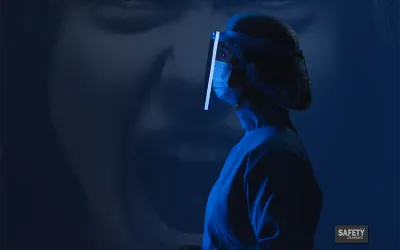

A phenomenon long minimised, now documented
Gropers at concerts, unwanted hands in a festival pit, verbal harassment in a queue : sexual and gender-based violence between audience members isn’t new, but it has long been minimised, partly because crowd density and darkness make identifying the person responsible particularly difficult.
Several major festivals and venues have since introduced dedicated prevention schemes — a sign that this is no longer a non-issue, but a safety priority in its own right, on a par with crowd management or fire safety.
Why concerts and festivals are particularly exposed
Several factors combine to make this kind of behaviour easier :
Crowd density. In a packed pit, physical contact is constant and often unintentional — which makes it easier to disguise a deliberate act among the mass of unintentional contact.
Poor visibility. A dark venue, shifting stage lighting : the usual visual cues disappear.
Noise levels. A call for help becomes inaudible just a few metres away, isolating the victim even while surrounded by people.
Alcohol consumption. It lowers the perpetrator’s inhibitions and can also weaken the victim’s ability to react.
Difficulty of identification. Once the person has been pulled out of the dense area, finding the exact perpetrator in a moving crowd is often impossible without immediate intervention.
This is precisely the ground on which YourSafety.training and Moë-Kan are building a joint offering : operational event-safety management from Moë-Kan, de-escalation and intervention in tense situations from the ResponsAbility method. Discover the Live events & entertainment sector.
The signs to watch for in a crowd
A trained steward or security officer can learn to spot cues even before an explicit report reaches them :
- someone actively trying to pull away from a tight group, or heading for an exit for no obvious reason;
- eyes scanning the surroundings looking for a member of staff;
- a tight cluster of people around someone who is visibly uncomfortable or frozen;
- repeated backward movements toward the same direction within the crowd;
- a direct report, even a very brief one, from someone in the audience — never to be minimised or postponed.
No single sign is conclusive on its own, but noticing them makes it possible to anticipate an intervention rather than discover the incident after the fact.
Stepping in without making things worse
The order of priorities matters as much as speed :
Extract before confronting. The first action is to get the person concerned to safety, out of the dense area — never start by confronting the alleged perpetrator in front of them or the rest of the audience.
Avoid further exposure. Avoid creating an additional gathering around the victim, who has often already been exposed quite enough.
Gather the account calmly. A dedicated space, away from the noise and the crowd, lets the person recount events at their own pace, without time pressure.
Confront the perpetrator afterwards, if possible. Only once the victim is safe, and only if identification is reliable — a mistaken accusation in a dense crowd can create a second incident.
Document and escalate. Even a report that isn’t pursued further is worth logging : location, time, description, to feed the event’s overall safety system.
The legal framework, in brief
Since the law of 3 August 2018, sexist outrage (article 621-1 of the Criminal Code) punishes sexual or sexist remarks or behaviour imposed on a person, whether on public streets or in a venue open to the public such as a concert hall. Sexual assault falls under articles 222-27 and following of the Criminal Code, with aggravated penalties depending on the circumstances (victim’s age, multiple perpetrators, etc.).
Beyond criminal law, any operator of a venue open to the public or event organiser has a general duty of care toward the people it welcomes. This duty doesn’t mean preventing every incident — which would be practically impossible in a dense crowd — but putting in place a reasonable system for prevention, detection and handling of reports.
What a festival or venue can put in place, concretely
A few measures, already proven at major events, structure an effective response :
An identifiable help point. Visible, accessible, staffed by people trained to receive a report without minimising it.
A clear escalation procedure. Every member of staff, including volunteers, must know exactly who to tell and how, within seconds.
A visible presence in high-risk areas. Pit, stage surroundings, queues : a recognisable presence of trained staff both deters and enables a fast response.
Clear signage. Making clear that this behaviour is not tolerated, and showing where to report an incident, changes how the audience perceives the venue and makes spotting incidents easier.
A systematic staff briefing. Before every event, including for volunteers recruited on a one-off basis, on the signs to watch for and the procedure to follow.
Frequently asked questions
What forms does sexual and gender-based violence between audience members take at concerts or festivals?
Most often unwanted physical contact in the pit or near the stage (gropers taking advantage of crowd density), verbal harassment in queues or around the venue, and sometimes clear-cut sexual assault, all made easier by darkness, noise and close proximity.
Why are concerts and festivals particularly exposed to this kind of violence?
Because they combine several enabling factors : high crowd density, poor visibility (night-time, changing stage lighting), noise levels that make a call for help inaudible, alcohol consumption, and the practical difficulty of identifying the person responsible in a moving crowd.
What signs should alert a steward or security staff?
Someone actively trying to pull away from a group or reach an exit, a look searching for help, a tight cluster of people around someone who is visibly uncomfortable, repeated backward movements toward the same direction, or a direct report — even a brief one — from someone in the audience.
How should staff intervene without making things worse or further exposing the victim?
By getting the person out of the dense area first, avoiding drawing further attention to them in front of the rest of the audience, gathering their account in a calm space, and only confronting the alleged perpetrator once the victim is safe — never the other way round.
What does the law say about street harassment and sexist behaviour in a live event venue?
In France, sexist outrage (article 621-1 of the Criminal Code, since the law of 3 August 2018) punishes sexual or sexist remarks or behaviour imposed on a person, whether on public streets or in a venue open to the public. Sexual assault falls under articles 222-27 and following. A report made inside a private venue open to the public (a hall, a festival) follows the same criminal classifications.
Does an event organiser have a duty of care toward the audience?
Yes : any operator of a venue open to the public, or organiser of an open-air event, has a general duty of care toward the people it welcomes. This doesn’t require preventing every incident, but it does require a reasonable system for prevention, detection and handling of reports.
What concrete measures can a festival or venue put in place?
An identifiable, trained help point, a clear procedure for escalating an incident to the security post, a visible presence of trained staff in the pit and around the venue, signage making clear this behaviour is not tolerated, and a systematic briefing of staff — including volunteers — before every event.