What are Potential-Optimisation Techniques?
Managing a conflict, defusing it verbally, protecting yourself physically if needed, isn’t a sport. It’s a professional skill, requiring courage, technique, physical ability. But before any of that, it requires mental preparation: the ability to stay clear-headed under stress, act without freezing, and then return to a stable state — what psychologists call homeostasis.
That’s exactly what Potential-Optimisation Techniques (TOP) train: a teaching method for mobilising the full range of your resources, physical and psycho-cognitive, according to the real demands of a situation1. Preparing for this is the first step towards safety, well before the first technical move.
A method born in the French army, now widespread
TOP was designed in the 1990s by Dr Édith Perreaut-Pierre, a military doctor specialising in sports medicine, a sophrologist and hypnotherapist23. Called on to better account for the mental dimension of soldiers, she first developed her method for fighter pilots and air force flight crews, who face extreme operational stress where a lapse in judgement can be fatal4. The method was then rolled out across the entire French armed forces, and later extended to other armed forces4.
Given its proven effectiveness in the field, TOP experts from the military carried the method into civilian society5. It’s now deployed in the police, among caregivers, in departmental fire and rescue services, at SNCF, and in numerous companies56. It’s this trajectory — from preparing for combat to preparing for everyday aggression — that makes the method directly transferable to jobs exposed to tension and aggressiveness.
Édith Perreaut-Pierre remains today the method’s academic reference: her book Comprendre et pratiquer les Techniques d’Optimisation du Potentiel, être et rester au TOP is now in its 4th edition (InterEditions, 2024)7.
André Pisani and passing on the method
The method didn’t stop with its founder. André Pisani, a former non-commissioned army officer, discovered TOP in 1998 at the Interservice School of Sports (EIS) in Fontainebleau8 — the very place where Édith Perreaut-Pierre had laid the method’s foundations a few years earlier. Together with Laurent Rocco, he became head of the national TOP unit within the National Centre for Defence Sports (CNSD), where the two men further developed and structured the founding method9.
Today a TOP expert and trainer of trainers at Optimiser Mon Potentiel, André Pisani embodies this continuity, from the military to civilian society, from the field to classrooms, top-level sports clubs and companies. It’s this direct lineage, from the founder to her successors, that I recommend to anyone wanting to go further than initial training and become a practitioner.
The 4 founding pillars, and how we put them to work
The reference literature defines four founding pillars of TOP: breathing, multisensory representations (or mental imagery), inner dialogue, and relaxation1. Depending on the goal, a TOP sequence will draw on two, three, or all four pillars together1.
In our courses, we organise these pillar-tools around four concrete operational goals — that is, what we’re trying to achieve, rather than the tool used to achieve it:
1. Self-control: regulating stress before it takes over
Three levers, drawn directly from the breathing and relaxation pillars, let you regain control of your own nervous system before a situation even escalates:
Controlled breathing. Regulating your breathing helps stabilise heart rate and improve concentration — often the only physiological lever directly accessible under full tension.
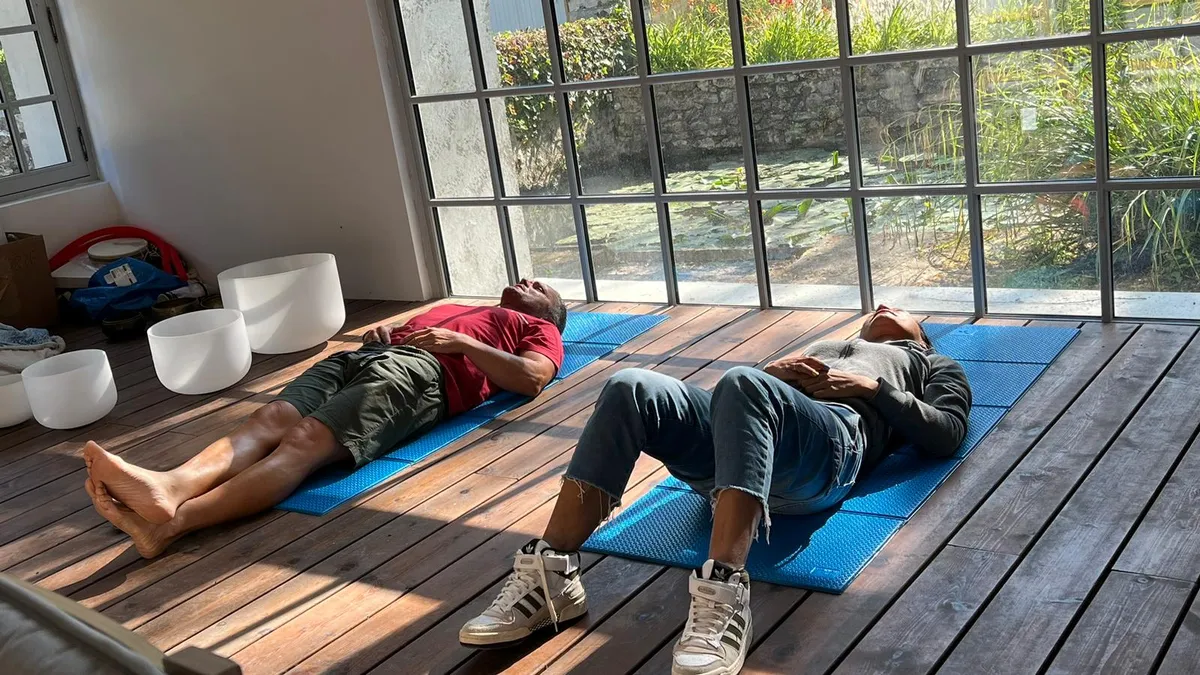
Relaxation. Simple exercises reduce accumulated physical and mental tension, aid recovery, and allow for calmer decision-making, including in the minutes following an incident.
Sensory grounding (mental imagery). Visualising a calming scene reduces the impact of felt stress and strengthens emotional management. Combined with breathing and relaxation, it establishes a state of calm and control, available on demand.
2. Mental pre-activation (PAM), mobilising before intervention
PAM mainly draws on mental imagery and inner dialogue to prepare the brain and body for action, in the minutes before a known or anticipated intervention. Built directly into the intervention protocol rather than treated as a separate exercise, it optimises responsiveness and performance against the challenge to come.
It addresses in particular a specific problem: decision-making stress, which paralyses action through doubt and hesitation. By defining clear rules in advance, and training decision-making under pressure, you build confidence and the ability to act quickly, without every second being consumed by hesitation.
3. Recovery: reconditioning to last
Boredom and fatigue are the silent enemies of vigilance, often more dangerous over time than a one-off stress spike. This third goal relies on the optimised break time (TPO): 20 minutes is enough to reduce accumulated stress and mental fatigue, maintain a high level of concentration, and prevent burnout.
TPO also plays an emotional role: it allows you to return to a state of calm and clarity before taking on a new task or important decision, rather than moving from one tense situation to the next without ever clearing the accumulated load.
4. The reflex activation signal (SAR), instantly returning to the required state
SAR draws on all the pillars in a synthesised way, anchored to a single trigger: it produces an instinctive, immediate response to a critical situation. Linked to a specific stimulus — one everyone builds or restores through training, a gesture, a word, a sensation — it allows you to act without hesitation, bypassing the excessive stress and analysis that, under pressure, slow down or paralyse decision-making.
It is, in short, the “personal trick” every professional ends up forging for themselves — except that with TOP, this reflex is built consciously, trained, and reliable exactly when it matters.
TOP within the YourSafety.training ecosystem
TOP isn’t a standalone module — it runs through most of our approaches. It’s the foundation that lets you move past the cognitive dissonance that blocks so many technically well-trained professionals. It’s also one of the central tools of the coping strategies we develop to absorb the stress of an incident, before, during and after.
To experience it in real, supervised, progressive conditions, the TOP Initial Training lets you make these four goals your own over several days, with supervised role-play.
What I bring to the table
I’m a TOP practitioner. I “TOP” everything, all the time — it became a reflex before becoming a tool I teach. If these techniques interest you beyond the initial training, I can support you and point you towards one of the best TOP schools in France for a practitioner qualification.
Footnotes
-
Potential-optimisation techniques, Wikipedia (French) ↩ ↩2 ↩3
-
Potential-Optimisation Techniques® in the military field, Cercle K2 ↩
-
Born in the army, Potential-Optimisation Techniques® spread into society, interview with Édith Perreaut-Pierre ↩
-
The TOP method: Potential-Optimisation Techniques®, Cercle K2 ↩ ↩2
-
Comprendre et pratiquer les Techniques d’Optimisation du Potentiel, être et rester au TOP, 4th ed., Edith Perreaut-Pierre, InterEditions, 2024 ↩
-
The TOP - André’s notes, testimonial, Optimiser Mon Potentiel ↩
-
Potential-Optimisation Techniques (TOP): what is it and what’s it for?, Webikeo ↩